
Always a little late the party, I managed to bring myself to see Avatar over two nights this long weekend. Each viewing was accompanied by a pair of martinis, and chicken on spinach or cauliflower. When the roommate leaves, me eating habits become elemental, and my drinking habits alternate among martinis, bourbon on the rocks, and Liberty Ale. It;s a reduced life, but the solitude is pleasant. In that mood, I climbed the stairs to take advantage of my upstairs neighbor's absence to use his Hi-Def TV for my Avatar experience.
I don't like adventure films, and I define the genre broadly. They seem contrived, and because they rarely are based on genuine psychological portraits, they tend to employ cheap plot tricks whose only point is to induce thrills in those who enjoy the suspension of disbelief. I have no problem with that ... I am not trying to be a snob. I just don't enjoy this particular set of cheap thrills. Of course, my reductions here are informed more by extrapolation than by filmic experience. I have probably choked my way through fewer than a dozen "adventure" films in my life. I couldn't force myself to watch the third Lord of the Ring after almost ripping my hair out watching the second ... "will this never end" I quacked. I did enjoy The Shining, but you know how long ago that was.
So I came to Avatar a skeptic.
And I left a skeptic also. That said, I quite enjoyed it.
But first the good part. The special effects, even without 3D,were fabulous. But what I would want ... and I recognize that I am in a tiny minority here ... would be a steady state, plotless, anthropology-style excursus on life on an alien planet. All the drama and the cheap plot just get in the way of a perfectly lovely fantasy.
So to the cheap plot. One wonders why Mr. Cameron employs such a thin kitbag of character stereotypes. Tuf and gruf, goofy but likeable, balsy female pilot, hero with a heart of gold but confused. Of course such banalities of character loom as Einsteinian relativity beside the single-digit algebra of the native population. It is a curiosity that liberalism prefers to depict primordial or universal religion in terms so reminiscent of the popular representation of Native American religion that I expect a pow wow to break out. And indeed, eventually one did.
Notwithstanding the central action of an improbable battle in which arrow-firing cavalry brings down a massive modern air force, and notwithstanding the underlying theme of the struggle of nature against technology and the fight of primary extractors against the military/industrial complex, I think this is fundamentally a religious film. The society of the natives is riven with religion, and indeed nature itself on Pandora is religious in its geo-biology. Not too much intelligence is spilled in constructing this pantheon ... there is a simple pantheistic god and lots of mystical communicating via trees and dandelion seeds and what not.
I am sure that most people came for the adventure and the special effects. I wonder what they make of the pantheism. Is it just that this sort of religious prattling is common in scifi? Or do they just not care.
A recent states that fully 18% of Americans no longer profess a religion. I suspect the figure is actually radically higher, but most people like to pretend they have a religion because it is generally thought to be expected. That Avatar's religious message exacted so little chatter is a sign to me that the religious debate in this country is controlled by that tiny array of fanatics who strike fear into those who would say the emperor is nude. Many more Americans are actually pantheistic quasi-animists than would admit or even know it. I think that is why the religious content of this movie provokes so little discussion.
Religion and war go together of course, and so too in the movie. But while the religion presented at least had some intellectual pretenses, the military stuff was a joke. I mean, cavalry in a jungle. 2,000 troops are all they could muster? And suddenly firearms appear without apparent explanation.
But that too, I suppose, is part of the adventure genre. It is not about the sense of it, nor is it about the factors or the psychology. It is about setting up the action and then riding it.
I enjoyed the ride, but I could not suspend disbelief. I'm waiting for the documentary.
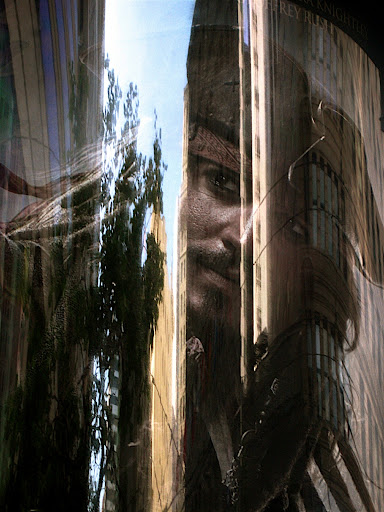
Photos by Arod, from Quane Alley, I believe.
Monday, May 31, 2010
Notes on Avatar


Sunday, February 15, 2009
Stanley Goes to the Fish Market

I read Stanley Fish's blog in the New York Times pretty regularly, and he recently published a piece called The Last Professor. The post questions the survivability of the humanities in the academe, and refers to a recent book by one of Fish's students, Frank Donoghue, who has a new book entitled “The Last Professors: The Corporate University and the Fate of the Humanities.”
Fish argues for "higher education as an enterprise characterized by a determined inutility" ... I refer to a similar concept in the phrase "the tyranny of relevance." Fish writes (and I have conflated two paragraphs for clarity's sake):
This view of higher education as an enterprise characterized by a determined inutility has often been challenged, and the debates between its proponents and those who argue for a more engaged university experience are lively and apparently perennial. The question such debates avoid is whether the [ideal of Michael Oakeshott that "there is an important difference between learning which is concerned with the degree of understanding necessary to practice a skill, and learning which is expressly focused upon an enterprise of understanding and explaining"] (celebrated before him by Aristotle, Kant and Max Weber, among others) can really flourish in today’s educational landscape. It may be fun to argue its merits (as I have done), but that argument may be merely academic – in the pejorative sense of the word – if it has no support in the real world from which it rhetorically distances itself. In today’s climate, does it have a chance?
Both Fish and Donoghue say "no" ... regardless of the merits, scholarship as an end in itself untethered to an explicit and argued social utility cannot and will not survive.
There is plenty of evidence to back up their skepticism, not the least of which is that students increasingly look to post-secondary education with career in primary mind. The last flush of inutilitarian idealism might have been the 70s when people like me took classes in Chinese language whose principle was that the memorization of Tang dynasty poetry could lead to fluency. The result of that is that I can recite imperfectly two lines of a famous poem and I can scratch out around 25 characters.
 I believe, and I am in agreement with Fish here, that scholarship is justified about anything that is knowable or anything about which we still do not know everything. That covers pretty much any subject. To require an explicit tie between knowability and utility predisposes the scholar's work with reference not to the object studied but to a present paradigm that may have nothing to do with the object. This was precisely the tyranny-of-relevance error of the whole theory digression that bedeviled literary studies for a couple of decades ... I am happy to aver that the grip of airless theory seems to be loosening.
Having said that ... that study itself is sufficient argument for scholarship ... methinks Professor Fish got lost in the marketplace. Because as with everything, the pure argument, the single source of truth, is always wrong at least because it is incomplete but more so because it closes the door to the fuller explication of the underlying dialectic. You see, scholarship has never been free of the tyranny of relevance in any meaningful overarching sense. Certainly one has professor x who spent three decades deciphering runes while his colleagues snickered at his tawdry clothes and poor hygiene. But even professor x lived in an institution situated within a society, an institution subject to rulership, economics, pressures, and social changes.
Complexity is what interests me, and reductive-to-the-single-point arguments run out of steam. I can stamp my foot all I want about pure scholarship ... I could rage on about the undeniable fact that most professors produce precious little of memorable quality ... and I could feel good about it. But it would not get me closer to understanding the dynamics that are rendering scholarship in the current era.
I think you need to start with the counterposing pure scholarship and social context. They are never separate, though social context pays vastly less attention to pure scholarship than the other way around, certainly. The fascination is in the complexity of that relationship. I wrote a few days ago about a forum on the term "Islamism" and I hope that I prefigured a couple of these points there. Emmerson, the scholar talking about Islamism took the term out of its robust and fractious social context and laid it before us as something to be studied. I think that Emmerson lost a chance to change scholarship by insisting on writing a book about this term instead of creating a living monument on the web. But that demonstrates precisely the struggle between the pure scholarship of wresting the term from its context and looking it as a captured wave (not a fixed or reified object) and the social context that wants some feedback from the pointy-heads who do this kind of stuff.
Emmerson lives in a rarified world, the world of the endowed scholar who just thinks and writes. Great work if you can get it. I think that world has a responsibility to knowability, even when the objects it might choose to study are not relevant, or what is more significant posed-as-relevant, to come current issue or problem. In other words, we can demand of endowed scholars that they do something, and then we can tell them that we are free to make of what of what they do what we want. They can't own it or keep it back. Again, that is a dialectic.
The key to saving the humanities is to inhabit both terms of that dialectic.

At MRU, the major research university where I pile seashells on the beach in exchange for loaves and fishes, I have argued on numerous occasions ... and you must realize that I have no formal standing to make this argument ... that the humanities departments need to seize the idea of the double major. I like this one: French and Civil Engineering. Or, Classics and Urban Studies. Or, Art History and Mechanical Engineering. Or, History and Earth Systems.
Yes, there is a grave danger here that the humanities find themselves tied to a stated and required relevance. But, so long as one keeps this slippery slope in mind, such formally combined majors enable the humanities to inject into the real world the perspective of pure scholarship. More significantly from the social context point of view, they can round up some students and increase their own footprint.
So, the French and Civil Engineering works in Africa for the United Nations, the Classics and Urban Studies student intertwines classical ideas of open space and citizenship with modern transportation systems, the Art History and Mechanical Engineering student retains the notion of beauty as he proposes a bridge on a freeway, and the History and Earth Systems student comes to this most complex of human issues with an understanding that we have ripped our environments to shreds since we first walked the earth.
The humanities can surrender the social context parts of the double major to the science and engineering departments, and thereby liberate itself to its own genius, to whit the inutilitarian search for the knowable.
I propose this example by way of outlining a path for the humanities to engage with the world that threatens it even as it operates to save its most previous perquisite ... the ability of scholars to define for themselves what is worth studying. Moaning that the world has no room for us, well, that is an ancient complaint that has an odor not of striving and research but of coffee and upholstery.

A few further notes on complexity and military history
Last night at a dinner of five pointy-heads, my excellent friend Ian and I sparred about the Dresden bombing and that spun into Hiroshima and the Japanese surrender. Dresden is in the news these days because February 13 was the 64th anniversary, and the day often presages neo-Nazi marches about war crimes committed against Germany. There is a nice piece in the English Der Spiegel here in which Frederick Taylor, a British historian who has written extensively on Dresden, is interviewed. (I suspect he is the son of the noted left-wing British historian, AJP Taylor but I could not find any proof of that).
Taylor rejects the view that Dresden was chosen only because it was an architectural jewel and as part of a singular effort to destroy Germany by destroying civilian morale; he argues that these were certainly factors, but that it was also a significant military target. One can quibble, and we certainly now know that the carpet bombing strategy was not a significant factor in the defeat of Germany. But I find a reduction of the bombing of Dresden to war crime to be a kind of moral cubbyhole that exempts the viewer from the full range of dialectics at play in the moment. In other words, once we assign the single factor and require that all argument start there, we lose the ability to understand how things actually happen, how strategies in the high sense devolve into tactics on the ground, if I can make a macabre pun. But complexity of argument can readily come back to its starting point, and Taylor, the champion of a complex argument about Dresden does precisely that. The aforementioned interviews ends thus:
SPIEGEL ONLINE: Do you think it was justifiable?
Taylor: Personally, though I can trace the logic of it, I have serious doubts. It is a ghastly example of how war depletes the moral reserves even of democratic nations. Goetz Bergander, who survived the bombing of his native city as an 18-year-old and has written widely about its destruction, has described the bombing in his characteristically forgiving way as "outsize." It was certainly all of that.
I think a similar moral cubbyhole has long obscured clarity in argument, especially among liberals, about the events that ended the Pacific War in 1945. It has been argued that the Japanese were ready to surrender, but either we needed to give them time or we needed to figure some way not to force unconditional surrender. There is no evidence that I know that supports this other than assertion. Significantly ... and this is a grave error in anyone seeking to understand military history ... no credit in this view is given to the implications of the fog of war. What the Americans knew was that resistance had not stopped and that large numbers of troops were being amassed in the South in preparation to resist the assumed invasion. That the Russians had entered the war likely had more impact on the Americans than the Japanese military leadership much of which was committed to a fight to the death of the last Japanese; why would they care whether that final plucked life was given up to a Russian or an American?
But once we credit a notion that the Japanese were ready to surrender before Hiroshima, or that they really surrendered after Hiroshima because they were afraid of the Russians and not the bomb, we avoid a grindingly difficult moral argument: did the A-bombs result in a net of fewer deaths; and, if so, were they thereby justifiable?
That is the moral crux of the end of Japanese war, and it should not be avoided.

A last note:
I have meant to write about this for a few days, so I append it here. There was a touching article in the New York Times entitled "My Sister's Keeper". It concerns aging colonies of lesbian separatists who have kept the faith, as it were, with that peculiar 70s ideology. I want to note that the lesbian separatists did damage to the gay movement, and they are not heroes of mine even if they have lived their lives courageously as they saw fit and so desired. The gay movement of the 70s was overwhelmingly male not because we rejected women but because women rejected us. They had lots of excuses ... all men are rapists, the gay boys have too much sex, we expected the women to make the coffee while we did the movement ... but only one argument is real. Feminism of the 70s was homophobic in a dominant sense, that is in its majority and in its actions. Lesbians active in the women's movement felt they had to hide or at least downplay their homosexuality. The separatists, while hardly hiding from feminism, hid from the world and proclaimed that isolation as liberation. They contributed nothing to our present freedom, and their absence weakened us both in the short term and in the long term. I wish them well in their retirement, but the record tells the tale.
Photos by Arod. The owl is from a window on Divisadero Street; the lion is from a Board of Education building on Van Ness; the window reflection shot is just off Market near Gough; the statue is from Golden Gate Park; the finger is from Hayes Street (I think) near Masonic; all are from San Francisco.
Sunday, December 28, 2008
Loss

This is a terribly sad post with which to end the year ... I have been avoiding finishing it for days. But it has been a hell of year ... a year of enormous loss. So with that ...
I spent the day wandering today ... I wanted to spend some time thinking about the film that my oldest friend, Ian Mackenzie, showed us last night. The film is called The Last of the Nomads, and it is part of a CBC (Canadian Broadcasting Corporation) series called The Adventurers. (Bizarrely, the full version of the film is only available in Canada; if you are in Canada, see it here.) The film won the Grand Prize at the Banff Mountain Film Festival.
The film is about Ian's 15-year work with the Penan people of Sarawak; Ian has some further material on the Penan and his work here.
The essence of the film is about loss ... in this case, the loss of language, heritage, and way of life of a people who practiced harmony in a land of plenty for countless generations. The loss is cruel, and heartless, the result of the immoral greed of the ruling caste of Malaysia that enables the rape of the primeval rain forest which is the ancestral home of the Penan. They tried to stop the bulldozers in the 80s with their bodies, but they were carted away. The film documents the moment when Ian discovers that the last of the nomadic Penan have settled and sowed crops.
There is no doubt that this was "inevitable" in the sense of the conflict between industrial power and greed against a people armed with sticks and time. Social structures morph and change, and they can come to an end. Countless nomadic societies have settled ... not only now but for thousands of years. But the inevitable aspect of this cannot mask that it did not have to be such a guillotining ... that a rational approach to forest resources could have allowed sustainable extraction and continued forest-living for the peoples who, by any standard of dispassionate justice, "own" that forest.
But this film is about loss ... about an execution ... about the terminal act in the assault of a government on one of its people who were in the way of greed.
So I took a large part of the day to think about loss both in the broad, historical context of what Ian showed us about the Penan and in a more personal sense. I went to Three Wells in Mill Valley, a place where a seasonal stream cascades through a forested gully. My old friend June grew up in Mill Valley and played there as a child in the 30s long before Mill Valley became the preserve of a rich liberal caste who seem to shun you as you walk the back roads ... perhaps a projection of my imagination since I have long observed how the rich look askance at those who invade their preserves without invitation. June showed Three Wells to our mutual friend Kurt, who was a mentor and best friend, and who perished of the plague in 1992. Kurt and I went to Three wells on several occasions to sit by its cascading waters and examine the Universe, as he would call our discussions.
Loss is everywhere in human existence ... it is the sine qua non of progress and change and both personal and social development. That is not praise for loss, nor does it equate one loss with another. We cannot hold back the hands of time, as it were, and the hands of time are driven by loss. My education in loss, as I have addressed from time to time in these scribblings, was AIDS ... "the Deaths", I have called it ever since ... and I had to come to grips with the unendurable. Not unique ... and I not so much comforted myself as assuaged my fears by thinking of other more horrible losses that at least someone survives.
Remember the 2004 tsunami. Ian was in San Francisco when it happened, and together we consumed the news insatiably. We had traveled together in Aceh, and knew some of the scenes. Watching the footage was addictive, not only because of the sheer horror or it, but also because of the vicarious participation in loss ... trying to fathom the unimaginable, trying to settle your mind on top of something that cannot be endured.
But, of course, it is endured. As one reads history, that is the remarkable thing about our species, that we endure against all odds. The results, let alone the causes, are not always pretty ... and there is endurance against that which cannot be controlled and endurance against that which ought never to have been.
There is also the less panoramic but more personal loss. Three local institutions emblematic of an earlier period in the history of the Castro (the San Francisco neighborhood where I live and where the defining early events of gay liberation occurred) ... Welcome Home, a hippyish greasy spoon that was a haven for gay clones in the 70s and 80s; All American Boy, a long-time clothier who supplied the clones with plaid shirts and jeans back in the day; and Gay Cleaners, the Chinese laundry run by the strangely cinematic and curiously named Gay family, apparently kicked out with a month's notice after 30 years by a greedy landlord who evidently does not read the Wall Street Journal. I am cranky about these losses because they signal the yuppification of our gentrified neighborhood, and I loathe all the cell-phone toting yuppies with their dumb-struck boyfriends in tow. I fear the loss of my neighborhood.
What sort of a loss is that by comparison with a people who lose their homeland or their way of life. Our society turns over at a furious pace ... an unsustainable pace, one might argue, but we still wait for the final proof on that. One has to be careful to balance one's sense of outrage at loss against the greater losses that we witness daily in the New York Times.
Loss. No future without it. Indeed, there is not past without it. One cannot address lass without thinking of one of my guiding aphorisms ... to whit, that there is no such thing as a zero sum game.
I won't spend a lot of time thinking of a loss from which greater gain was had ... do we have modern Europe without the guillotine, Napoleon, the Franco-Prussian War, the two great wars? Probably not, although that is not to say that all the horrors were the sine qua non. Could it not have gone another way? It turns out that there is not a lot of support in history for a flower child notion that history would have been much better if only everyone just got along.
But that is never a justification for the horrors of the moment. It is no argument that we cannot "at this moment, at this time" (paraphrasing Obama) apply reason and find ways for all sides to benefit. I think of Gaza in that sense.
And I think of those poor last nomads, Ian's friends, living in a forest hut yards from their more settled cousins, wistfully and sadly, if not bitterly, contemplating a loss whose contours even they cannot fully measure. There is no good reason for it; only greed ... a well-known historical reason. I quibble with Ian about how he records the oral texts of this people before they disappear. But I admire his courage in being willing to witness up close the agony of people unjustly stripped of their heritage, and to be willing to bear witness so that people in the future may remember these last nomads.
As I thought about this and watched the water in Three Wells, I remembered old Kurt, dead these 15 years. I remembered talking with him about issues just like this as we together watched the water swirl at Three Wells. Loss, and the future, and the unimaginable that comes true no matter what.
Photos by Arod of Three Wells, Mill Valley, California.
Sunday, October 19, 2008
Notes from Winchester

I am sitting on a full-to-the-gills flight from Washington-Dulles to San Francisco and am crowded against the wall by a charming but very fat young woman who is sleeping through this sardine can. From time to time I have to put my right arm in the air because there is nowhere else for it.
United has managed to lose my luggage three times in a row now. I noticed ... too late, obviously ... that my baggage ticket was inscribed with the name of one Gavin Brown who is heading ... egawd ... to Johannesburg, and so, apparently, is my bag. The man in front of me in the check-in line had a red passport, and that has to have been Gavin. I guess the idiot at the counter didn't clear the name or something from the computer ... I had kiosk-checked-in my seating assignments, so no red flags. A fine customer service person, Sharon, at Washington Dulles headed off to head off my baggage. She thinks she got it, but no guarantees, and I get to find out in SFO.
Three times in a row. Life's like that.
Part of what bugs me in that is that once your luggage is lost, you leave the Internet world and head back to paper form world. I know that they have all my data in the computer ... I know when they look up my record that they can not only find my Social Security Number, but also probably have access to the NSA-screened calls I make to various other skeptics and atheists obviously unconvinced that what we need is to Palinize our security systems. Crude joke. Crude world.
I just want my bags delivered with me just once in 2008. Perhaps I will have to find somewhere else to fly if I am going to take that final shot at victory. Perhaps United will pay for that.
Visiting the aged parents is a tough and tender thing. I cannot stay as long as I would want, and especially as long as they want. The day of departure hangs over us from the moment I arrive. They live in a near-perfect senior housing complex in Winchester with a mob of the sweetest other aged p's you could imagine. They have their little dog, Hershey, and they have two sons within hailing distance. But Dad is almost 7 years out from a stroke, and life is hard work. Our visits break the monotony, I think, not to mention provide some love and comfort. But when the end of the fun is promised by the beginning, it is tough.
Life's like that.
I seem to say that to Mother a lot when I am around ... life's like that.
Sister and bro-in-law are on an around-the-world celebration of their 33 years of being together, most of those years having been spent in Australia. Sister and I take up as if we had not been apart for more than a day or two. But it was very cool to reconnect with bro-in-law whom I have not seen in almost exactly a decade. Funny the convergences that happen between dissimilar but not unalike souls. I suppose the fact that he is attracted to my sister predisposes him and me to have similar valences ... not exactly orientations or perspectives, but valances in the sense of wavelengths. If you are a physicist reading this, please roll your eyes and be appreciative of the fact that at least we-types believe in science even when we abuse its terminologies in our quest to concretize our humanism.
Life's like that.
Speaking of physics, I have rolled through a copy of Scientific American over the course of two airports today, and swam through the article on loop gravity which appears to propose that we replace the idea of the Big Bang with the Big Bounce. Sounds cool. The article wandered about the question of whether there was a pre-existing Universe that collapsed on itself and, if so, could we find traces of its history in our present Universe. I say "yes" ... that is the humanist response. Theists would have to go there too, I suspect. But the religious must glower "No".
I like to read Scientific American on flights, and I especially enjoy the cosmological arguments. Not because I grok them in any deep way, but because they inspire that poetry-of-the-spheres thing. Again, physicists, I accept your eye-rolling, and I obey ... but I plan to sneak back to my poetry as soon as you look away. Life's like that ... physicists beware.
Crowded in here, my right arm starting to ache ... and, christ, a ceaselessly nattering child babbling behind me, occasionally kicking the back of the seat. I half expect the little shite to pull out a drum and start banging. Still, I have a window seat and I can watch America slowly fade from green to brown and back to green again as we futily chase the slowly sinking sun.
So, the Universe, and the Big Bounce, and Theists. I have just plowed through a great read ... The Trouble with Tom: The Strange Afterlife and Times of Thomas Paine, By Paul Collins. I say plowed through ... should that be ploughed? ... because I hardly stopped for a breath. It is the sort of book that needs a glossary of characters because I kept getting lost. I especially enjoyed the reformed southern racist turned enlightened liberal rational Moncure Conway. Collins' great gift is to use his plot ... the search for Tom Paine's bones ... to allow his reader to wander almost convivially through the great budding of intellectual currents of the 19th century. We are their product, even if the vast majority of the ideas they produced are long-since garbage-heaped ... Darwin excepted, of course. That said, there is a confluence in ideation from the 19th century which is having a latter-day and unfortunate revival ... to whit a kind of half-baked theism in the sense of those who proclaim that there is no necessary contradiction between religious belief and science. Sorry, I beg to differ. It had a certain rationality in the 19th century given the dominance of religious thought over every aspect of life, but its revival now only proclaims that all that we know, all that we have discovered, every unearthing that we have done has yet to convince vastly too wide a swath of the species that religion is bunk. Depressing. Maddening.
That is what I mean by Palinization ... the revanche of the religious into your living room. Weak theism is no answer, but perhaps it is all we can get. See Obama as weak theism. I saw another aspect of the 19th century in Ottawa when the whole lot of us ... aged p's, sis and bro-in-law, and myself ... tottled off to the spectacular Canadian War Museum. Notwithstanding the 18th century and the 20th century, Canada's self-invention is potted in the soil of the 19th-century. I saw the uniform of Sir Isaac Brock and the clean hole just under the broad lapel where the bullet that killed him entered at the battle of Queenston Heights in 1813 ... years ago we all climbed the obelisk at the site when we were a young family of six. A fine speaker of a docent, a 60s-something man with the classic jacket and medals of a Canadian legionnaire, spoke up on the point to us. He long wondered, he stated, why there was no blood until he ran into a group of Canadian Armed Forces surgeons who explained that the precise location of that hole predicted an almost instantaneous death in which all the bleeding would be internal. Fascinating. Father took it in silently.
Earlier the same docent-legionnaire had marveled in front of a large photograph of soldiers on their way back from the battle of Passchendaele at how fat and powerful their fingers and hands were. "These are farm boys," he said, and he was right of course. Passchendaele is likely the best place to say that Canada became Canada there. Our troops there proved themselves to be elite forces ... and as they participated in the great bloodletting that brought the long 19th century to a close, they defined Canada as a nation. Blood and nation. Life is like that.
On Saturday, there was an article in the usually quite underwhelming Ottawa Citizen about the role of Lester Pearson in the United Nations response to the Suez Crisis of 1956. A rather nuanced article that seemed simultaneously to support and undermine the thesis, broadly accepted, that the 40s and 50s were a high-water mark for Canadian diplomacy, and one from which we have shrunk ever since. Again, not precisely certain where the writer stands on the question, but he seemed to suggest that the undermining of that argument provided ground for those who do not lament the current Canadian irrelevance in international affairs. If we weren't so great then, so he suggests, then who cares if we are a bunch of duffers now.
I was raised on the notion of Canada's unique and liberal contribution to world affairs ... that our contribution of troops to solve the Suez Crisis in 56 was the road to a future without war in which rationality and sense prevailed over the bloody nationalisms born of that 19th century and which would not die. My family is NDPers ... the Canadian labor party ... but we admired Pearson even then. Pearson, of course, found his nemesis in the maniacal and eccentric Conservative, John Diefenbaker, who managed to take just enough of a bite out of Pearson's time on the stage to prevent him form being the greatest Prime Minister of our long century on the stage. Can't say I agree or not, but Pearson changed from being a liberal hero to a bit of a sad sack over time, and we remember him as a man just shy of greatness.
Life's like that.
Canada, too, just shy of greatness. I feel that all the time when I am there. Canadians do not know how good they have it ... no one does ... and they are just parochial enough not to be able to use their unique position to bless the world with the fruits of theirs insights. That's how I feel about it. That's how I feel about the election concluded during my stay in which the tiny minds of the Canadian Conservatives managed to deny themselves the majority which they do not deserve based on about 38% of the vote nationally.
Still, I love the country, and it is always bittersweet returning to my home for more than half my life. I want to be in my world, and I leave behind that fantasy land, Canada.
One more note as the ladies with the gin and tonic draw near. There was a piece on the National News on CBC about how Canadian banks are doing much better in the great financial crisis by reason of two factors ... they are more cautious and they are more regulated. Harrumph. Whoddathunkit. Caution and regulation, the cure for the American disease.
Or would you rather have Palinization?
Life's like that.
More photos from the Canadian War Museum here. I'll try to add some photos to illustrate this rant later.
Wednesday, September 24, 2008
Swallow the Rabbit Whole II
When I returned from Five Days in Paris in 2006, I vowed that I would return to my lifelong reading practice of wandering around history ... and force the mad snippet practice of Internet browsing into the background. I do not know how successful I have been with the latter, especially given the madness of following the present madness that my kind American hosts call a presidential election. But my vow to return to history has been ... well, just perfect.
As I wander around the ages, I keep coming back to Central Asia. You see, I think we have long underestimated just how critical has been the Central Asian role in constructing world civilization, and that role has always been radical but not always nice. So I read Hugh Kennedy's When Baghdad Ruled the Muslim World, a rather popular but well-written history of the Abbasid dynasty from 749 to ca 935, then John F. Richard's The Mughal Empire from founding in 1526 to the effective end in 1720, though they lingered in dissolution and feebleness for another century and half, and now Colim Imber's terse dissection of the first three and half centuries of what became the Old Man of Europe, The Ottoman Empire. I am plowing through the last one because I am anxious to move on to a period I have never before studied in the form of Roger Savoury's Iran Under the Safavids. (Honesty demands that I note that in the midst of this jag, I indulged in Efraim Karsh's Islamic Imperialism: A History ... and I promise a post on that some day.)
So there's my reading ... and it all makes me wonder how the hell the 'publicans ended up with their standard being borne aloft by the increasingly dish-rag-like John McCain. Dynasties were based on the charismatic notion of infixed authority ... that is to say that the ruler is corporeally given to rule. Hence the authority of idiots when they come along, hence the felt necessity to preserve a dynasty (see the Abbasids) long after they were powerless. Hence the fear and trembling in front of a genuine ruler. Nothing new here.
I like to argue that authority and authenticity flip in the movement into modernity. So, where the Ottoman subject quivers in front of a dribbling fool like Ibrahim I (r 1640-48, then deposed and murdered), he does so because authority proves authenticity. That there is a Sultan, he must be real.
But no one quivers in front of John McCain. The networks worry themselves into a lather about who is "presidential" ... that is, who appears to be authentic. Once they prove that to themselves, they will anoint that one with what we can call authority. The present, long-running configuration is that no Democrat is authentic, but all Republicans are. I remember someone a long time ago explaining this to me. When Republicans splay a football-sized flag across their convention, this is natural. When Democrats do it, it feels like pandering ... or at least we are made to think it ought to feel like pandering. This is akin to atheists feeling ashamed that they skipped church every Sunday morning.
Still, no one quivers in front of John McCain. Somehow dubya had the Kevorka, if I may. It was lost on those of us with brains ... and in that, I include the cyncical reactionaries with brains who pretended to believe they believed in him when in fact they believed in a Sultan-styled presidency where any moron with a world-consuming smile can "lead" a dark cabal which operates hidden and without principle. Reactionaries think that this is good for us, notwithstanding five millennia of earth-shattering proof that cheaters never prosper ... at least not for very long.
McCain is a cheater ... and I am not referring to his reasonably rank treatment of the first wife whom he dumped for miss frozen-face rich-bitch wife number two "who cares how many houses we own." No he is a cheater because notwithstanding all the maverick tripe, he lies and lies and besides he never tells the truth. But that is nothing new ... it is that his transparency is not the knee-slapping type of fake-rube dubya, but the lies of a terrified little man way out of his depth who is making the case that he is capable when in fact all he believes is that he is deserving.
Today's "suspend the campaign" thing, surely that is the last straw. I am of the view that a genuine capitalist recoils at the prospect of a bail-out, and that a genuine socialist figures the bastards had it coming. McCain can't figure out who he is ... his obvious and evident discomfiture presently derives from a man once sure of himself in that simple "I was a POW" manner who has now strayed so far from his fairy-tale narrative that he cannot figure out where he is.
Meanwhile, Obama is plain ... well ... presidential. Calm, magisterial, unperturbed. Notwithstanding ... understand the tongue-in-cheek ... the touch of the tar brush, isn't this the authenticity our nervous tail-ending commentators seek? They are so damned close to saying it ... even George Will has gone over to the dark side ... there is only one president in this race, and it is Barrack.
So nerve-wracking. Like being told that either you will be beheaded or you will be crowned. Kind of like old Ibrahim I who lived in captivity his whole life, trembling lest the executioner arrive at any moment. And then he became Sultan, still trembling, and devoted himself to 8 years in the harem, apparently given especially to fat women. Didn't save him. He ended his days being strangled in a prison cell.
Do we get strangled or do we inherit the kingdom? Hold on.
Tonight's drinks ... a Manhattan (Wild Turkey and Carpano Antica with both Angostura Bitters and Regans' Orange Bitters No. 6, garnished with an organic maraschino cherry) followed by a Old-Fashioned Whiskey Cocktail (Bullet Bourbon with Curaçao, Fee Brothers Whiskey Barrel-Aged Bitters, water and ice). I'll try to get some pix up before I go to bed but after Project Runway. Sorry if the logic is a little tormented here .. .I am still decompressing from my Summer of Toil ... that'll just have to be the excuse.
Sunday, September 14, 2008
Buffalo Bill Cody

Started the day out at the beach ... Ocean Beach. Actually started it by waking up bolt upright at 4 in the morning, thinking about work, but that is par for the course these days. And then I walked the dog down through Hayes Valley. But all this was in aid of getting my sorry rear end to Ocean Beach as early as possible while the sun was low in the east and before the masses arrived.
And why would that be ... well it would be a fabulous art event put on by San Francisco native artist Thom Ross Ross recreated the 1902 visit of Buffalo Bill Cody and his traveling show of Indians by creating and erecting over a hundred representations of the participants on plywood. The Chronicle had a truly underwhelming little piece on it ... why were they trying to hide it? I'll come back to that.
The images are quite unreal, and the collection of them on the beach is mind-blowing. It is gone now ... it was there for only two weeks. Not sure if this was underwritten by anyone, but it had the feel of a guerrilla art, albeit on a large scale. My friend June says that there was a demonstration against it at some point, again not reported if it in fact happened. Perhaps a bunch of the excessively racially aware came down to grouse, perhaps they had placards. I don't know.
I do know that recreating something that did in fact happen forces everyone to think about it. This should have been a huge event that sparked conversations about the relationship between representing and thinking, about the nexus of being and seeing, about the modern fallacy of identity and the premodern fascination with posited otherness. You see, we like otherness when it is domesticated, while the premodern enjoyed otherness when it was presented as untamed but not dangerous. Both revel in otherness, but the earlier one seems more genuine, less self-righteous.
I have argued both here in my little blog and in my dissertation (which I really do need to rescue from its dark repository on my own bookshelf) that there is a flip between authority and authenticity as we move from the premodern to the modern. The premodern look for authority and attribute authenticity to it. The modern do not trust authority, so they look for authenticity and posit authority in it. In the case Buffalo Bill and Thom Ross ... Buffalo Bill presented himself as an authority on the real Indian, and his show was authentic by relation to his authoritative stance. In the case of Thom Ross, we peer at his creations and wonder is they are authentic ... did Indians really have stars on their saddles. If they did, then he is authoritative; if not, he is a charlatan, a usurper. This is the nervousness that leads the Chronicle to a mere paragraph about an event that should shake this city that is too broad to be shaken any more at this point.
We have to blow this contradiction to shreds. The modern aficionado is so terrified of being snowed that he cannot look at anything unjaundiced. This is the slender advantage of the brainless conservatives who again are threatening the Republic with their madness. Apparently precious few of them have considered the obvious disadvantage of having a cheerleader-sportscaster in charge of their drive for war with Russia ... has that imbecile truly not understood what a war with Russia would actually mean? The conservatives do not worry about the contradiction between authority and authenticity since they are one and the same, and only a pointy-headed liberal equivocator would think otherwise. Read Frank Rich today, and be very afraid ... I am sure you are already very afraid.
But back to art.
I think this display precisely challenges the thoughtful to articulate where and how they stand in relationship to the contradiction between what is real and who says that is it real.
I tired to approach the artist who, much to my admiration, was all dooded up as Buffalo Bill. I just wanted to say thank you. But he was surrounded by the slightly more than middle-aged art ladies who love these things much as I do. So I never said it to him ... but now I say it ... Thank You, Thom. Mind-blowing.
Photos by Arod today, except the historic one from 1902. My collection of photos on Flickr is here.
Saturday, September 13, 2008
Hurricanes and all that

Since my earliest memories, hurricanes have thrilled me. I confess that I root for them ... having a rooting interest in hurricanes has no actual effect on their progress. As with everything else,the Internet makes a mini-obsession like this so much easier. I look at the National Hurricane Center constantly whenever there's a biggie on the way.
Perhaps the obsession has to do with the darkness of water, and how hurricanes enforce the dominance of the oceans upon our precarious perch here on land. Perhaps it is the great howling of wind and the prospect of being ripped away from mother earth and thrown about helpless. Most likely it is simply quivering before the power of nature, of being done to no matter our pretensions to power and control.
Just imagine the unnerving thrill of the howling winds, the bottomless pit of your stomach as you realize that you are without recourse, the dark realization of return ... return to the depths of the ocean, return to nature's wrath.
I wake up in the middle of the night when there is a hurricane and turn on the television to watch whatever they proffer for us.
Gustav was a sloppy affair once it made U.S. landfall ... even managed to make dubya look good, at least for those who don't pay attention, and so far from disturbing the 'publican convention, it made them seem human and under-exposed their tawdry mendacities notwithstanding that liberals always underestimate how transparent they are.
And let's not forget poor Haiti, thrashed thrice in rapid succession when it has nothing left to give. Of course, one should not forget that its lack of forest cover ... and hence particular vulnerability to flooding ... is the direct result of the first anticolonial revolution in the Americas which, no matter its justification, ended up exiling or slaughtering all the whites and denuding the entire Haitian part of the island of trees. But I digress.
Now Ike, that was a hurricane. The photos from space were staggering ... it plain filled the Gulf like a big pudding in a crystal blue glass. It kept threatening to gather its skirts and regain its status as a cat 4, but never made past a high 2. And the vaunted storm surge peaked some miles down the coast from Galveston. But still, what a thriller.
One never roots for death in these things, but I cannot deny that I root for hurricanes to hit the self-righteous. And is there a place more contemptuous of the future, more bound into its own self-righteousness and more oblivious to the nightmare it represents for the species than Houston? Or leastwise a place that is in the path of a hurricane?
They got away easy this time. A bunch of damage, all of which will spur a little economic revival as construction jobs and insurance money flow about. Galveston will be ugly for a while, but why the hell do people think they should be living there anyway (sez the finger-crosser living just to the right of the San Andreas fault)? Regardless, the unspeakable truth of this hurricane is that the entire Gulf and Atlantic coasts will become uninhabitable as global warming progresses because vaster and more powerful storms will drive economic activity away ... perhaps to California, gawd help us. I speculate that in a hundred years, those coasts will be inhabited by poverty stricken subsistence fishermen living in stilted houses that are washed away every few years.
There was an exciting piece in the New York Times about the eye of the storm which passed directly over Galveston. How many times have I fantasized about being in the eye of a hurricane. Fortunately for my longevity, I prefer fantasy to chasing the bloody things. And that is how it will have to remain.
Photos by arod ... the top of street art in the Mission, the bottom of Christmas lights. These speak hurricane to me, albeit in a rather secular fashion ... or perhaps I just mean dry.
Sunday, July 27, 2008
My Winnipeg
Went with Christopher and Paulo to the San Francisco opening of a new film by Guy Maddin called My Winnipeg. It's a dreamy introspection worked around what the narrator describes as yet another attempt to flee the town in which he has lived for his entire life. He is on a train and much of what we see is projected through the window as the train rolls endlessly along. The cinematography is rough, black and white, choppy, raw, new footage mixed with old. Certainly avant garde, but compelling and demanding rather than aloof and evasive. I wrote a few quotes down as we accompanied Maddin on his flight, as we tried to flee with him.
How can one live without one's ghosts?
This is a film about memory, and its vagueness, and how it deceives and traps us. How you can only try to run away, but even in flight you are already heading back. Even at the end of the film, we do not know if he escaped, or if he really tried to escape. We know that he doubled back on himself and found a way to release himself from his self-made vow. But we do not know what happened, or indeed if anything happened.
Whatever happened only took 80 minutes to happen ... I appreciate a film that says what it has to say promptly ... but it was a long, drawn out 80 minutes. It seemed like two hours ... and I say that not with fatigue but with the entrancement of fixation. He didn't even lose me with his long riff on the travails of hockey rinks and hockey teams in town. He let go for a moment of the dreamy quality of his narration and got a little fevered ... though the dreaminess returned with the phantom hockey teams of aging stars.
The breath freezes in front of your face and falls to your feet with a tinkle.
You have to feel for a place like Winnipeg. It is truly lost in the middle of the continent. From a distance it is a haze of winter breath, vague, unknown, not on the agenda. But it is, more than any other city in the Canadian prairies, a real place with a history that mattered, with enduring cultural institutions. As the world collapses on itself, and as everything turns into suburbs and commodities and the latest thing, Winnipeg gets even vaguer, even less there. And this film accepts that vagueness. It lives entirely in the chill of the winter where, and I can attest to this, the crunch you hear as you walk is as much your breath as it is the snow under your feet.
I lived in Winnipeg from the summer of 66 to the summer of 68; I was in grades 9 and 10. I knew about this film only because Christopher told me when I told him that I have been planning a vacation that starts and ends in Winnipeg. When I lived there, I loved the winter. I rose early, even though I was in my young teens, to walk my dog Laddie in the dark and snow and freezing cold. I still dream about Winnipeg. And my dreams too are about being trapped there, even though I am not trapped there any longer.
Who gets to vivisect his own childhood?
Maddin took this film as an opportunity to revisit his childhood by reconstructing its key events. He got Ann Savage to play his mother, and he rented part of the house in which he grew up. Who gets to do that? He states in the film that Winnipeg has a law that everyone must carry a key to every house they have ever lived in ... were that the case, I would have quite a weight of keys. When we left Winnipeg in 1968, we were in a car on our way to the train ... not sure if it was a taxi or what, but my Father had left earlier and was already in Toronto. Mother asked where was the dog ... we looked around, and he wasn't there. So we had to head back to the house ... 181 Oak ... to get him, and the new tenants had already arrived and were examining this great placid beast who would not budge. We didn't need keys. Imagine, though, being able to stage that scene again, to pick the actors who play your family as it appears through the fog of years.
A little indulgent, perhaps, in the wrong hands. But in Maddin's hands, the scenes are haunting and elusive, foggy and alluring. 
Everything that happens in this city is a euphemism.
Early in the journey, the film turns on sleepwalking ... Maddin asserts that Winnipeg is the sleepwalking capital of the world. Sleepwalking is a purposive vagueness, adroitly performing actions without knowing what you are doing. Zombie-like. Sleepwalking, I suppose, is the euphemism for enduring the torments of life, for growing up when we are so conscious and yet so out of control ... so totally in a situation that we do not know how large or small it is. The Maddin character is vaguely sleeping or dozing on the train ... here he is in full flight form everything he has known, but he cannot rouse himself to attention. Sleepwalking into freedom. Does he ever arrive?
Maddin is a classic unreliable narrator. Down the street and around the corner from where he lived is the Sherbrook Pool. Maddin claims that it is the only pool in the world where there are three pools built one on top of the other, that the bottom two were closed in 1966. I bolted up when he showed the pool ... because I had my bicycle stolen from in front of that building in the summer of 1967. A terrible day that pierced my innocent sense of right and wrong. I never got the bike back, but I did get trip to the police station to look at recovered bikes.
I didn't know about the three pools for the very good reason that there never were three pools; it's pretty clear he uses the stacked pools as referent for the Indian belief that there is another confluence of rivers beneath the confluence of the Red and the Assiniboine which is at the heart of Winnipeg. You never can know what to believe in this film, so it is the easier, and more fun, to give up at least as long as you are in his snare. The frozen horse heads are true ... and as I search the backrooms of my mind, I seem to recall that I knew about them. It's a great Winnipeg story ... a bunch of horses bolt from a fire in early winter, fall through the ice on the river, and are trapped, frozen to death, their heads projecting through the ice for the rest of the winter. The stuff about the gay mayors and the hot dude shows at the Golden Boy Club are at least partly true. But homeless people are not confined to rooftops in Winnipeg.
I guess all the rambling ends up with this: Guy Maddin is still confined, and so are we all. Confined not to memory but to memory's tricks, its deceits, the way in which it undermines truth and leaves us vulnerable. Confined to where we know who we are sufficiently that we can sleepwalk through the every day ... and confined sufficiently that even when we try to escape, we fool ourselves into not quite making it. Home is where memories are frozen in the ice, and yet where they sublime into an ether in whcih we are doomed to sleepwalk. That My Winnipeg for ya.
I do plan to return to Winnipeg, and I expect to use viewing this film as a goad. This is the plan: fly into Winnipeg in October, rent a Prius, drive to Ottawa, stay for five days to visit with my sister who is making one of her periodic pilgrimages from her home in Queensland, then drive back via the northern route (Hwy. 11) and spend another couple of days in Winnipeg. Lots of photos and blogging.
Nice interview with Guy Maddin here. Cleaner copy of the trailer here An intelligent reflection on the film here.
Thursday, June 19, 2008
National Martini Day

Big day at MRU (work) today, so I got up at 5 which is only 20 minutes earlier than usual. I left the dog-walking chores to RB, my sainted ex, and actually drove my ancient '86 Honda Civic the 38 miles through the dawning day, NPR my only companion. And it was via NPR that I learned that today is National Martini Day. Now, if you google "National Martini Day", you will find sites that variously proffer June 19, June 17, November 7, and June 1 as National Martini Day. I say that the nation would be better off if every other day were National Martini Day, but that would be o so not-PC. O, the hell with it, I say it anyway.
I'm going with today as NMD because it has broad support and it is convenient to my purposes.
Under the influence of my good friend and bartender, I have given up other inebriants of my life, by which I mean most particularly beer, in favor of fine spirits expertly prepared ... it is a privilege of being half way to the big 110. When I started this experiment turned lifestyle, I could barely finish a martini. Now a pair of them is an occasional treat consequent upon good behavior and a deserving attitude, and I have no trouble therein. (My cute young doctor, whom I like to call Doogie, tells me that an adult male is entitled to three drinks a night, that being any combination totaling three of 1.5 ounces of liquor, a bottle of beer, or 5 ounces of wine ... he is an oenophile, so I assume that he means fine wine, although I just go for the cheap French and Italian Trader Joe's varieties. I try to stick to his limits.)
Not all martinis are equal ... if you want some truly horrifying recipes, check our Hungry Girl or Home Baked Memories. Both of these sites illustrate the regrettable modern tendency to forget that you can't improve on a classic!
I prefer the gin martini. I had quite a time making myself a nightly Tanqueray martini last time I visited my parents in Ontario. For a while, I preferred the Vesper martini, also known as the James Bond martini.
Of course, in fact, I strictly speaking prefer any martini that RL makes since his attention to detail is so precise that his martinis always have the extra 2 percent that distinguishes the good from the great. But tonight, RL is not here, and I must make my own martinis ... the first a Tanqueray and the second based on Plymouth Gin.
Before I wax philosophical, I do have one less-than-edifying martini story ... when I was a mere stripling, perhaps 24, I was invited to a party thrown by a bunch of socialists in a ramshackle old building that I had formerly inhabited. I invited my friend TG who was an 'fb' ... i.e., a person with whom I both played and dallied, as it were ... even though he didn't know a socialist from a hornswoggler. I suppose I invited him because he was fun and sexy and I had ideas for a tryst after all the ideology and enforced dancing. I stopped by his apartment in the West End of Vancouver ... nowadays a hard scrabble working stiff like TG could not possibly afford to live in the West End, but this was in the 70s and life was still possible, as it were, unencumbered by cell phones, SUVs, and the arrogance of the overstuffed ... but I digress. TG had some friends there and they inveigled me into drinking not one but two martinis. For a "stripling" unaccustomed to the quotidian quintagenarian habits he would ultimately affect, two martinis was like a couple of grenades in a powder keg. Boom! TG's friends came to the socialist party, after pouring me into their auto. Gawd noze what happened to them, but I was quickly a quivering ball of drunken idiocy, and there are those who did not allow me to forget my discomfiture for years thereafter ... and of course my plans to waylay the comely TG came to naught ... at least on that night.
So as to the philosophical waxing ... life is a bitch ... or as one whispers in the office, a beeyatch. You do yer damnable best, and you are still back on the bloody train the next morning at 7:19 sharp, with the same cast as the day before, each quickly sinking into their habits be it sleeping, or tappity-tapping on their iPhones and computers, or reading the newspaper, or, as in my case, pointedly stuffing my ears with plugs and yanking out whatever monster tome of ancient times presently has my fancy. When it is all over ... and that involves another train trip ... and the dog is walked and I have made my nightly calls to my sundry old lady friends ... well, then it is time for a martini or whatever other fine spirits are on offer. I enjoy that part of life. I often sit, as I am now, at the counter and watch RL cook and prepare our libation. Tonight I am watching the sainted ex, RB, who has consented to cook for me in RL's absence. But it is the same routine ... I am fatigued from work, filled with speculations, and earnestly desiring the little layback, the tiny release, the satisfaction of that perfect martini.
So ... with due respect to those whose freely choose to refrain ... damn the puritans, screw the sanctimonious ... have a martini ... lift your glass to me or thee or to whomever you choose. And smirk and smile and call out, Long Live National Martini Day! Photos by Arod of bar windows on Columbus and Polk street respectively in San Francisco.
Wednesday, March 19, 2008
The Impostor
 The tale of Lev Nussimbaum aka Essad Bey aka Kurban Said, and its competent telling in Tom Reiss' The Orientalist: Solving the Mystery of a Strange and Dangerous Life, throws into stark relief both the attraction of the impostor and the irreducibility of historical context in human lives. Born into a wealthy oil-magnate Jewish family in Baku (now Azerbaijan) on the shores of the Caspian Sea, Lev responded to the brutal reverses of the 1905 and 1917 revolutions, and then the rise of Nazism in the country to which he as exiled, by writing and re-inventing himself. Reiss writes:
For most of his life until fortune threw him to a place where he could no longer joke about such things, Lev would keep up a kind of comic dialogue with his writer friends about his "transformation" from Lev to Essad. It was not that he mocked his conversion or allowed others to. But among those he felt he could understand, and these were mostly his fellow Jews, he seemed to think it fair to reveal the transformation. With anyone else, he grew circumspect, neither denying nor accepting that he was covering up something. Rather than trying to refute anything, he responded by diving deeper into his identity and becoming more and more the Orientalist--more and more Essad Bey.
Remember transformation for a moment. I'll come back to that.
Many Jews of the late-19th and early 20th centuries adopted a stance as eastern, Asian, non-European, seeing in Muslim and other Eastern peoples kindred spirits opposed to the Europeans among whom they lived and who reviled them as conjunctures demanded. Lev was of this ideational caste, if you will, and as such might not precisely be seen as an impostor if we can accept that he genuinely converted to Islam and subsequently adopted a Turkish name. But he rewrote his past, and he dodged his present, and his religious system was always an act and never a belief. The identity came first and religion had to follow. That is a less rare pattern than one might imagine ... I believe it is precisely the pattern that has so many atheist politicians trundling off to church every week (does anyone with a rational mind believe that Hillary truly believes, or for that matter Obama notwithstanding his genuine earnestness?).
There was one exception to the precedence of artifice over belief in Lev, however. He was a genuine monarchist, a devoted follower of the dead Czar as well as the exiled Sultan and erstwhile Caliph. The historical background is that his life declined along with monarchy. But there is more to monarchism than nostalgia. It represents a pointed and deliberate false consciousness especially in a man as quick-witted and intelligent as Lev.
Monarchism is the worship of impostors. How's that? Monarchy is like religion in that any rational analysis reduces it to the nothing that belies it. What props up monarchs and gods is charisma and history and, again, irreducibility. To abuse the phrase of the day, they are what they are. So long as they hold power, they are powerful. When they no longer hold power they are windbags ... nothing more than the puffed up claims that surround them. To believe in them after their demise is affect because there is nothing to believe in ... the charisma has become a chimera.
For a man who constructed his life from whole cloth, monarchy conveys a sufficient reference to a reality in which the impostor can invest so as to create an imagined reality that is the imposter's stock in trade. Look back, young man, for the future bodes ill. It is in your imagined past, young man, that you can find the girding that will save you, nourish you, make you into what you can no longer be.
Again, Reiss writes:
He had had few friends growing up and had a precocious child's wariness of other children. Indeed, his passage praising absolute czardom begins with a short speech on why "I love old people, detest the youth"; the old are "calmer, cleverer, and more modest," and when the young turn their backs on them, as they inevitably do, they "must consequently fall into barbarism."
I love old people too ... like my father before me, I have always had friends older and often much older than me. As I get older, I tend to grouse all the more at the barbarism of intemperate youth ... notwithstanding the obvious fact that they are pretty wallpaper. That said, I have always been young ... by which I mean that I am impatient and revolutionary by nature. I do not brook idiocy and my definition of idiocy is broad and sharp ... I also enjoy oxymorons ... and I fail to understand why people are stuck and incapable of understanding history and necessity. The older people who are or have been my friends are young in that same way. And by turns, so many of the young about me are old in the sense that they accept what is given to them and look only for their own comfort. They bear similarity to the young of Lev's day I that they accepted what was given to them and looked for their own aggrandizement through a reductionist view of history. Our youth seem to have no sense of history ... time will have to tell whether that is a benefit or a torment.
What Lev saw in the old was that they understood transformation in a loose way, a clever way, modestly and with a smirk and a smile. What he detested in the young was their ideological fervor as he experienced it in the rise of the goose stepping youth of the brownshirts and the imperturbable murderers under red banners.
So, transformation. Impostors do transformations. They are loose about it. The con man smiles and draws you in. My father called one of my younger brother's best friends a "beloved infidel" ... the guy was an impostor, but you had to believe and you had to accept the letdown because you knew you had believed. You could not pretend otherwise. Transformation on some level is not being able to pretend otherwise.
There is another kind of impostor, the one who does fake-outs, and regressions, and bait and switch. The one who substitutes glibness and the snide for the con man smiles. What is appealing in the impostor like Lev is disgusting in the ideological impostor.
I speak, of course, of neo-cons and other such reductionist ideologues of contempt and self-assurance.
My readerly ride through the terrifying years of the 20s and 30s with Lev/Essad was a little easier than it usually is. I have always found the interwar period one of the most difficult in history to imagine because the horrors into which it descended were so unprecedented in scale. Did Lev's peers know? Did the cabaret people, the communists, the brown shirts, the working class, the street walkers ... did they have any inkling of the guillotine blade under which they lived, of the rapid drop into hell which the uncertainty of their lives portended?
In that vein, I sought out some reading on the development of thought and politics in the 19th century. I really want to read about German and Italian unification, but then I stumbled on Michael Burleigh's Earthly Powers. Sure, I thought, there's a meditation on how junctures arise in history.
Alas, the book is mired in the inability of the simple-minded to get beyond finding someone to blame. And who, do you suppose, would be at fault for both Nazism and Bolshevism ... why the Enlightenment, of course, not to mention pretty much anybody who lived before during or after the events and to whom one can paste the label "liberal".
The book was so nauseating that I could not get past page 44 ... I actually wrote "this is unreadable" at the bottom of page 39. The problem too often with the modern ideologue is that he cannot let himself resist snideness no matter how many opportunities are presented. Adjectives and asides and little sneers everywhere. So, speaking of the era of the Enlightenment, he writes:
Censorship, lax in practice but all the more resented in theory, as well as ferocious blasphemy and sacrilege laws, sought to compel orthodoxy. The philosophes tended to highlight the most extreme cases, often omitting crucial details that might have modified their starkly contrived contrasts. (page 30)
Elsewhere, he refers to the "several existing tendencies and novel developments that are known as the Enlightenment" (page 37) ... in other words, the great force that initiated the permanent decentralization of religion and idolatry in European life if
In other words ... and this is the essence of the weakly expressed thesis of the book ... Catholicism and absolutism were kindly forces that occasionally did naughty things, but really given a few more decades they would have led the world to a peaceable kingdom of goodness and light, and the awful liberals and Nazis and Bolsheviks would never have come to pass. If only those horrible impostors, the philosophes, had not mucked it all up. O for a good auto-da-fe ... where was holy mother church when we needed it.
Burleigh like all neo-cons is an impostor. They claim a connection to the past, but they sing a tune that makes no sense. They pose as monarchists or defenders of holy mother church (I have no proof, but I'll eat my hat if this guy isn't a revanchist Catholic). But in fact they propound a radical theory of the dissolution of democracy. They are not conservatives ... they are radicals who seek to enshrine an entirely new political elite who are beyond critique.
What a contrast is the transforming impostor Lev from the dissembling impostor Burleigh. Remember that things called by the same names are not by force the same.
Mark Lilla, who wrote the saddeningly sycophantic The Stillborn God: Religion, Politics, and the Modern West about which I commented here and here, wrote a "damning with faint praise" review in the New York Times. Lilla writes:
The utopians did not believe in God but they very much believed in religion. That is the truly novel development in the 19th century, and one which Hurleigh never manages to bring into focus: the less people talked about God, the more they talked and worried about religion. For the utopians, the revolution's defeat of the Catholic Church represented an enormous step forward for the human race, but also posed an unprecedented challenge. Once men thought themselves free from God they might think themselves free from one another, like elementary particles floating in the void. What modern, postrevolutionary society needed was a new religion, or a surrogate one, a system of symbols and ceremonies bringing individuals together without reference to a revealing, transcendent God.
There is so much teleology here that it is hard to swallow. Society did make some civic gods, and Burleigh blames all of that on the Enlightenment ... but history is never complete. So the fact that the first attempts at constructing a civil life without the stultifying effects of godliness were incomplete is hardly surprising. The fact that some of them were more bloody than anything that had come before is an effect of the industrial means at hand ... only a fool would wish upon us the medieval inquisition in possession of the tools of modern destructiveness.
Burleigh is just such a fool. In that, he poses as an impostor, for he is surely intelligent enough to know that there is no going back, and that his very stance is itself as much a daughter of the Enlightenment as is liberalism or socialism or agnosticism of what have you. So he pretends to this conservatism ... but it is a lie. No, for the neo-cons, there is much more afoot. There is a bloody reaction, the telling doom of their enemies, the victory of their snide asides.
Ooops ... now their hero is McCain ... how the feigning mighty are melting into dust.
I will try to return to the relationship of fascism and religion at a later point.
Tonight's drink is a Piña Colada, RL's very own recipe, as he says. And then, a hard day having been had by all, we followed that with an exquisite Blue Moon, this one slightly flavored with a little Marie Brizzard Parfait Amour ... which makes it just a little grapey in a carnavalesque sort of way.
Photo by Arod of a window on Noe Street in the Castro.
Thursday, February 28, 2008
Paradox
 Is it paradoxical that I start this post with the concept of paradox even as I confess that I have given up on Roy Sorenson's A Brief History of the Paradox? I always feel a little guilty when I abandon a book mid-read, but alas this sweet little tour of the history of Western logical theory began to feel a little too theological and not quite as paradoxical as I had hoped ... by theological I mean that theology is bunk but the history of religion is fascinating, and that is true of philosophy too in my particular view ... philosophy is oh such a yawn, but the history of ideas has no bottom to its depth. Sorenson's review tends to lard a thick layer of philosophical musing on a thin skeleton of known philosophical history, and it left me in its dust. This raises both the sidebar question of whether lard and dust should ever be used in the same sentence, and the more central question of whether there is any utility to philosophy.
The answers would be no and yes, and it is paradoxical that while I answer no and yes, my practice in the event was yes and no. To whit, I did use lard and dust in one sentence, but I did not find any utility in this case for philosophy.
Sorenson argues that paradox is a question that has too many answers. I think of paradox as the poor sister of dialectic ... poor by reason of its having been stripped of context and content. Take the engaging paradox of the heap ... if you have a heap of sand, and you take away one grain, is it still a heap? Repeat this process. What is the line between heap and not-heap? In real life, people answer that I know a heap when I see one. And this suffices for everyday purposes, but it does not give us a grasp of deeper or inner reality. In that sense, every paradox points to the paradox of gawd and the stone. If gawd is all powerful, then he can create a stone that is too heavy for him to lift. But is he cannot lift it, he is not all-powerful. Is the everyday answer to that conundrum this: I know a gawd when I see one? Well, not quite. (I remind the irregular reader that I figure, as a die hard atheist, that the name of gawd is irrelevant given his omnipotence so I spell him however strikes my fancy, no matter how puerile such a conceit might appear to the religious.)
I prefer the notion of dialectic ... as simply put as I can try, dialectic is the notion that counterposed forces in history through their engagement with each other create new oppositions related to but not identical to those which spawned them. That such forces are incompatible does not prevent them from engaging, and it does not prevent a synthesis which contains the evolution of both even as it spins a new contradiction composed of but not identical to the opposition which generated it. It's not that paradox isn't fun and profitable especially during the latter stages of drinking parties ... no, it is that dialectic is the fascination that keeps on fascinating.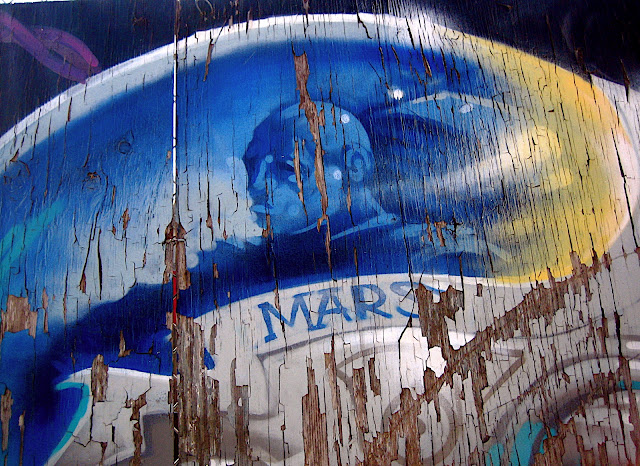
So I reluctantly left Sorenson's book in the dust (well, actually, I am still carrying it around in my man purse in case I change my mind and give it a reprieve), and I turned to Tom Reiss' The Orientalist: Solving the Mystery of a Strange and Dangerous Life, the story of a Jew born in Azerbaijan who masqueraded as a Muslim prince in the gathering gloom of Nazi Germany. A great read, recommended. It interests me here because it draws attention to the difference between paradox and dialectic. Lev Nussenbaum, the hero of the tale, is certainly paradoxical in the sense that he cannot be all or each of what he claims. But more to the point, his career draws its potency from its involvement in the most compelling contradictions of the period in which he lived, 1905-1942, or the first Russian Revolution through the middle of the worst war of all.
It reminds me of the paradox of the set of sets which do not contain themselves. Imagine a set of all things red ... I derive this from an interview with Sorenson on NPR ... because a set has no color, the set of all things red does not contain itself. So the set of all things red is a member of the set of sets that do not contain themselves. But is the set of all sets that do not contain themselves a part of itself? If yes, then no; if no, then yes. In other words, if the set of sets that do not contain themselves does contain itself, then it does not contain itself. But if it does not contain itself, then it does contain itself.
The impostor, the rake, the poseur, all are like the set that does not contain itself, for if they are who they are, then they are not, and if they are not who they are, then they are. The poseur's life in itself is only passing interesting, but the era which is his playground and which is the force behind his fraud, that is what we can view through the lens of the indissoluble contradiction that is his life. Reiss does a good job of revealing all of that, and so the dialectic that he explicates keeps me much more spellbound than the equally estimable efforts of Dr. Sorenson.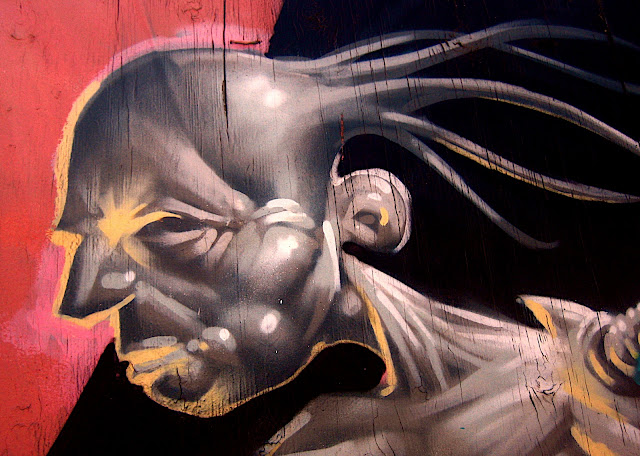
Photos by Arod of street art in downtown San Francisco, sometime last summer.


